 Find the real bottleneck
When the shower weakens every time someone runs the kitchen tap, the underground service line may be losing its ability to deliver flow as it corrodes, narrows, or proves too small. This page covers low water pressure main line Manheim homeowners run into, and explains how to tell a service line problem from a fixture problem, what a pro checks, and when replacement is the honest fix.
Manheim Main Water Line Co. connects you with experienced local pros who diagnose pressure problems on Manheim homes every week. Calls are answered 24/7, and where available you can get same-day or emergency dispatch. If the whole house has gone weak, call (223) 242-0393 and describe what changed. You will get a straight answer about what to check first.
The quick version
- Pressure that is low at every fixture points to the service line or the main valve; one weak fixture points to that fixture.
- Corroded or undersized service lines restrict flow, and the restriction shows up worst when demand is highest.
- A pro rules out the regulator, the main valve, and the provider side before recommending any repair.
| Pattern | Usually points to | Pro checks |
|---|---|---|
| One fixture weak | That fixture or nearby plumbing | Not the main line |
| Every fixture weak | Service line, main valve, regulator or provider side | Pressure, valve, regulator |
| Sudden drop | Valve, regulator or provider side | Those first, then the line |
Whole-house low pressure vs one fixture
The most useful observation is the simplest: is the pressure low everywhere, or just at one tap? Walk through and test the kitchen, bathrooms, laundry, and an outdoor spigot. If one faucet is weak while the rest are fine, the problem is almost certainly at that fixture: a clogged aerator, a failing cartridge, or a kinked supply line under the sink. Clean the aerator first, and the problem often disappears. When the pattern is low water pressure whole house, the service line moves to the top of the list, and the diagnosis starts there.
If every fixture is weak, the problem is upstream: the service line, the main valve, the regulator, or the provider side. Note how the pressure behaves: does it start strong and fade, which suggests a restriction that cannot keep up with flow, or is it weak from the first second? Does it drop when two fixtures run at once? These details tell the pro a lot before any tool comes out.
How a corroded or undersized service line throttles flow
A service line throttles flow by narrowing inside, or by being too small for the job from the start. On older galvanized lines, corrosion and mineral scale build up on the interior walls year after year, steadily shrinking the opening that water passes through. The line can look fine from the outside while the inside has narrowed dramatically. Pressure at the tap drops because the same household demand is now trying to squeeze through a much smaller passage, and the effect is worst at peak use: mornings, when the shower, the dishwasher, and a toilet flush all compete. The weak water pressure old pipes complaint is the classic sign of a line narrowed by corrosion.
An undersized line causes the same symptom differently. Some older homes were connected with a line sized for smaller needs, and as bathrooms were added, the line never caught up. A pro evaluates size and condition during diagnosis, since both a corroded line and an undersized one point the same direction: a new service line sized for the house as it is today. When the diagnosis confirms the line itself is the bottleneck, main water line replacement is usually the lasting answer.
A pro measures flow at the entry point and traces the restriction behind your pressure problem. Upfront pricing explained before work begins.
Other causes the pro rules out
A good low water pressure main line diagnosis does not assume the service line is guilty; it checks the other suspects first. The pressure regulator, if the house has one, is a common culprit: these devices wear out, and a failing regulator can choke the whole house. The pro checks whether a regulator is present and whether it responds to adjustment.
- The main shut-off valve inside the house: partially closed, corroded, or failing valves throttle everything downstream. If yours is stiff or weeping, main shut off valve replacement may be part of the fix.
- The provider side: supply issues or maintenance on the public main can drop pressure for a whole street.
- A single bad section of line: a kink, a crushed spot, or a failed repair from years ago can restrict flow at one point while the rest of the line is sound.
- Fixture-level problems: if the pattern is not truly whole-house, aerators, cartridges, and supply stops get a second look.
Testing and diagnosis: low water pressure main line Manheim checks
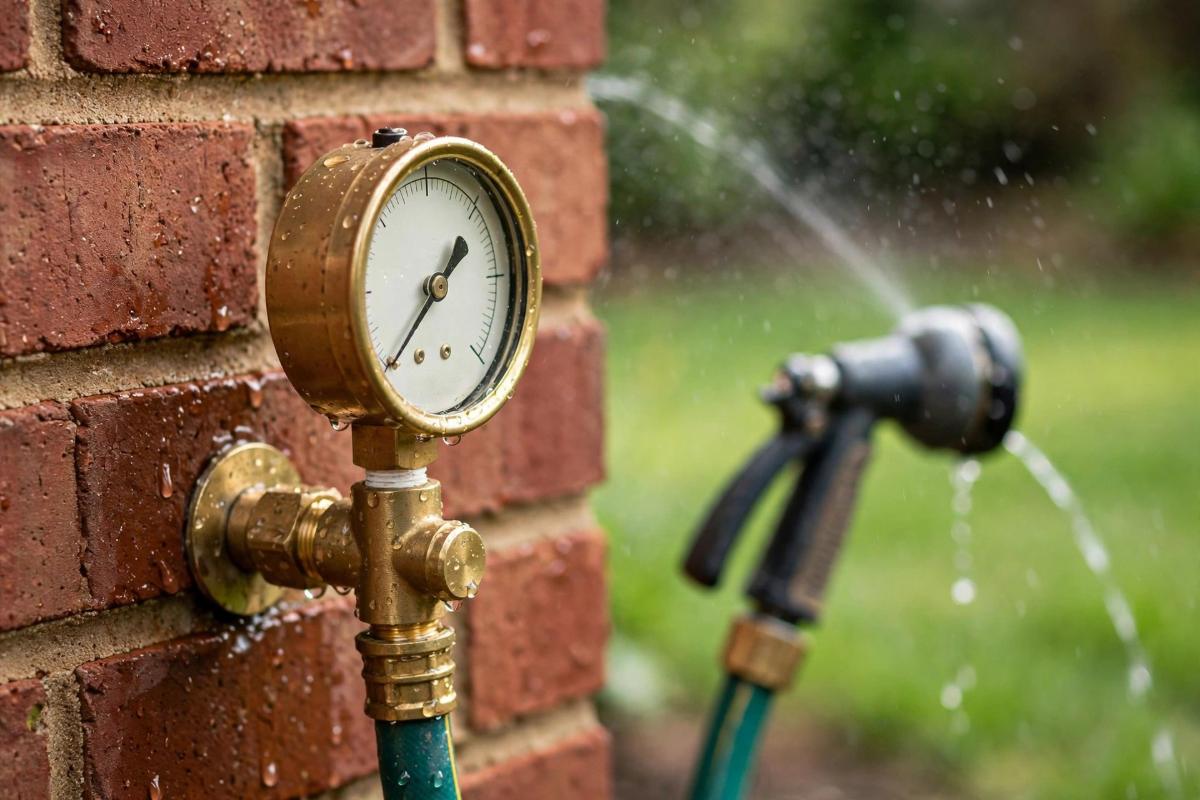
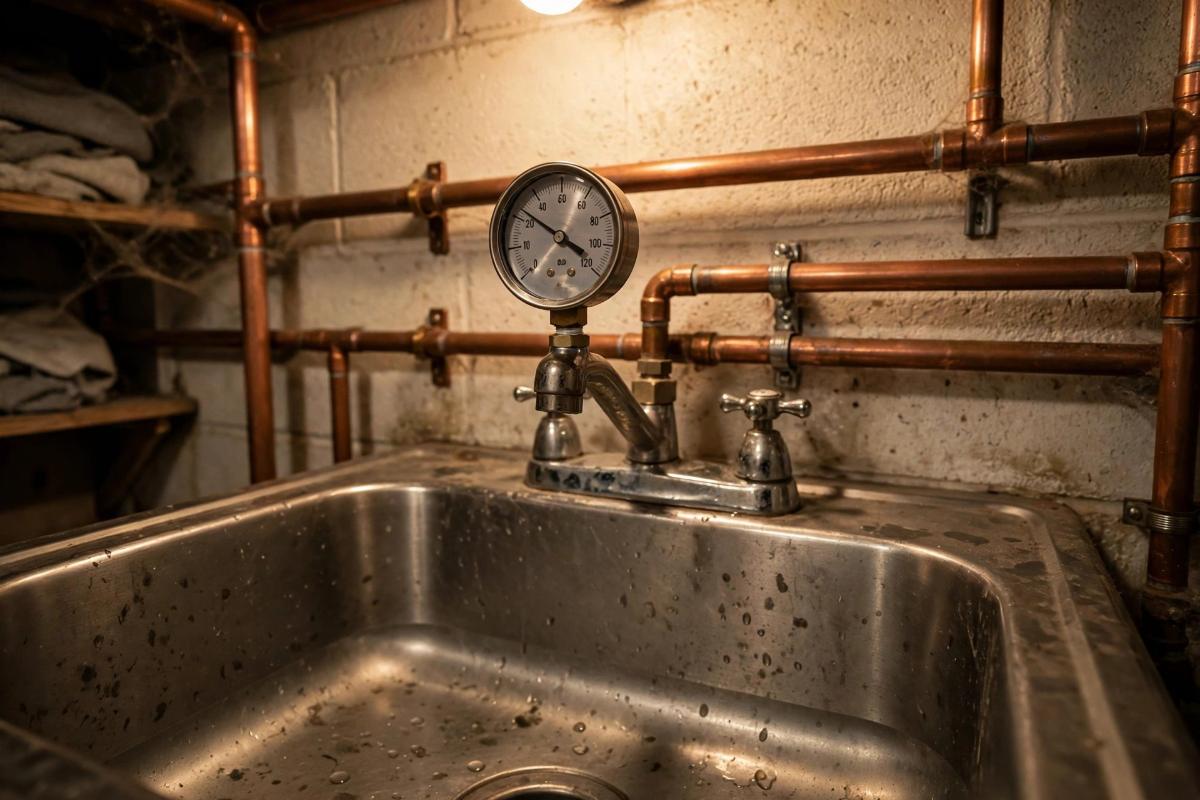
Low water pressure main line diagnosis starts with measurement. The pro attaches a gauge at an outdoor hose bib or the entry point and reads the static pressure with no fixtures running, then watches what happens when fixtures open. A line that holds pressure at rest but collapses under demand is showing a restriction; a line that is weak even at rest may have a supply or valve issue upstream.
From there the testing moves along the system: main valve, regulator if one exists, and the provider side is compared by asking whether the problem is street-wide. If everything upstream checks out and the pressure still falls apart under flow, attention turns to the buried line: its material, its age, and its repair history. In some cases acoustic listening or a flow test at the meter helps confirm where the restriction lives.
 Measured, not guessed
Whole house or one fixture? A short call points the diagnosis the right way. Calls answered 24/7.
Low water pressure main line Manheim: when replacement is the fix
When testing keeps pointing at the line itself, replacement becomes the real fix. In those cases repairs address symptoms while the underlying restriction stays in place, and the pressure problem returns or never fully leaves. A new service line sized for the house removes the bottleneck at its source.
The decision should never feel rushed. A pro who has done the testing can lay out the options and what each one costs, with no hidden fees, before you agree to anything. That upfront explanation is the standard here: Manheim Main Water Line Co. connects you with pros who explain pricing before work begins, so replacement is your informed choice, not a sales pitch. Ask how the new line will be run and what the restoration includes.
Manheim homes and pressure problems
Low water pressure main line complaints follow the age of the housing. The borough's 19th-century brick homes and early-20th-century blocks near the central square often run on the oldest lines. Post-war streets and the Penn Township subdivisions from the 1960s through the 1990s are generally on newer lines, but the oldest of those are now old enough that early restriction can show up, especially in homes where demand has grown with additions or extra bathrooms.
Freeze-thaw cycles add their own wear: every winter stresses joints and fittings, and a line that was marginal in fall can come out of winter noticeably weaker. If your pressure dropped after a hard cold stretch, say so on the call; it is a useful clue. Homeowners on the borough's western edge on public water face the same questions as everyone else, while Rapho Township's rural homes on private wells and on-lot septic are outside this service's scope. For the local picture by area, see water line replacement in Rapho Township and water line replacement in Manheim Borough.
While you wait
- Test every fixture, including an outdoor hose bib, and note whether the weakness is whole-house.
- Run two fixtures at once and watch whether both go weak; that pattern points to a line that cannot keep up.
- Check whether neighbors have the same problem, which suggests the provider side rather than your line.
- Check that the main shut-off valve is fully open; do not force a stuck valve.
- Note when the pressure changed and whether it was gradual or sudden; both patterns help.
Common questions
Test the kitchen, baths, laundry, and a hose bib. Weak everywhere points upstream to the line, the main valve, the regulator, or the provider. Weak at one tap points to that fixture, often a clogged aerator or a bad cartridge.
Yes, and it is a common cause. A main valve that is partially closed, corroded inside, or failing will throttle the whole house. The pro checks the valve early, since it is one of the quicker fixes when it is the culprit.
A pro measures static pressure and watches how it behaves under flow, then compares the readings against what the house should be getting. The pattern matters more than any single number: a line that collapses under demand is showing a restriction.
A sudden drop often points to a valve, a regulator failure, or an issue on the provider side, while a gradual fade over years points to corrosion narrowing the line. Tell the pro which pattern you saw. If neighbors are affected too, the provider side is likely.
Sometimes a single bad section can be addressed, but corrosion along the full length of an old line keeps restricting flow everywhere else. A pro can advise after seeing the line's material and condition.
Size matters, but condition matters too. During diagnosis the pro evaluates both, then recommends a new line sized for the house as it is today if replacement is the answer.
You can ask your provider whether maintenance or a known issue is affecting your street, and whether neighbors have reported the same problem. Street-wide pressure complaints usually sit on the provider side.
Low pressure alone does not mean a break is coming, but a restriction that keeps getting worse deserves prompt attention, especially on an old line. A pro can assess the line during a visit and tell you whether you are looking at a nuisance or something needing action soon.
When the line is the bottleneck, replacement ends the problem.
Areas we serve
Water line services
Get your pressure back
Weak pressure at every tap is your house telling you the line cannot keep up. Low water pressure main line Manheim problems are diagnosable and fixable, and they start with a measurement, not a guess. Call (223) 242-0393 and get a pro on the diagnosis.
Call about low water pressure from the main lineCalls answered 24/7. Upfront pricing, no hidden fees.