Two small pits, not a trench
Entry and exit pits replace the open cut across your yard.
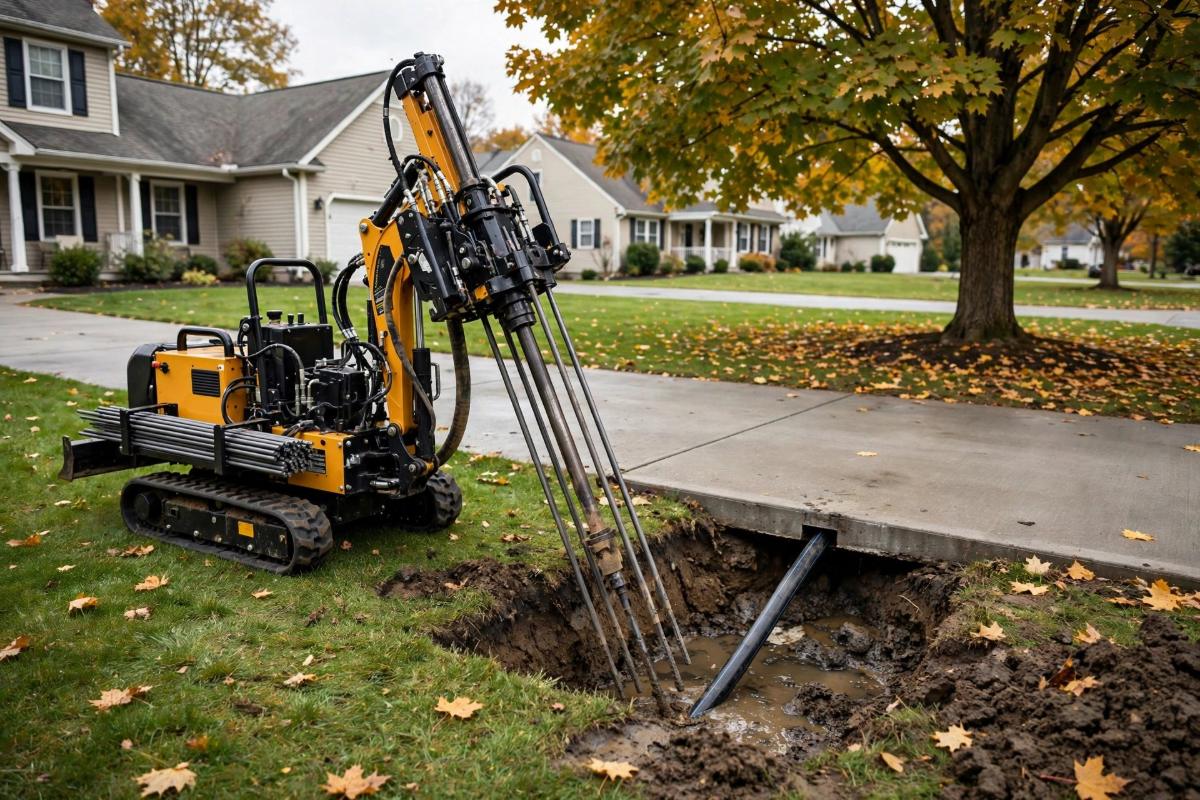 New line, no trench
A new water line without tearing up the yard sounds too good to be true, until you see how it is done. Trenchless methods install the replacement pipe underground through small access pits, leaving driveways, patios and prized plantings alone. If you are weighing trenchless water line replacement Manheim contractors offer, this page explains what the methods are, where they shine, and where they honestly do not fit.
We connect you with experienced local pros who do trenchless work on Manheim lots every week. Call (223) 242-0393 to talk through your lot: calls are answered 24/7, and you will get a straight answer on whether trenchless fits, with upfront pricing explained before work begins.
Entry and exit pits replace the open cut across your yard.
The new line passes under hardscape instead of through it.
Not every lot qualifies. A local pro tells you plainly whether yours does.
| Open trench | Trenchless | |
|---|---|---|
| Ground disturbed | The whole route | Mostly two access pits |
| Often suits | Open lawn, simple runs | Driveways, trees, hardscape |
| Limits | More restoration | Collapsed pipe, crowded utilities |
Trenchless is an installation method, not a different kind of pipe. The result is the same new water service line you would get from an open trench: new pipe, new connections, tested and backfilled. The difference is purely in how the pipe gets into the ground.
Instead of opening the full route, the crew digs small pits at each end and installs the pipe between them underground. Your lawn keeps its shape, the walk stays walkable, and the job footprint shrinks to the pits and the equipment path, which is the whole appeal of the method.
Before any method is chosen, water line leak detection confirms what the old line is doing and where it runs. You cannot plan pits around a line you have not mapped.
The two common trenchless methods work differently. One approach, pipe bursting water line replacement, uses the old pipe as a guide: a bursting head breaks the old pipe outward while pulling the new pipe in right behind it. It needs the old line's path to be usable.
Directional boring drills a fresh path underground, steering the new pipe from pit to pit without touching the old line at all. It shines where the old pipe has collapsed, wandered off line, or simply is not there to follow, and it is a frequent pick where the host pipe is damaged.
Old pipe condition decides the method. A pro can read your situation on the call.
Trenchless earns its keep where the surface matters: under driveways, patios, mature landscaping, and anywhere restoration would cost more than the pipe. Long runs under open lawn can go either way.
Here are the honest limits. Not every line is a candidate: badly collapsed sections can block a bursting head, tight utility congestion can rule out a bore path, and very short runs may not justify the setup. Trenchless is also not automatically cheaper; on a simple open run, a trench can cost less. A pro who does both will give you a straight answer about which method is genuinely better for your lot, not which sounds better.
Describe your lot on the call and get a straight answer: trenchless, trench, or either.
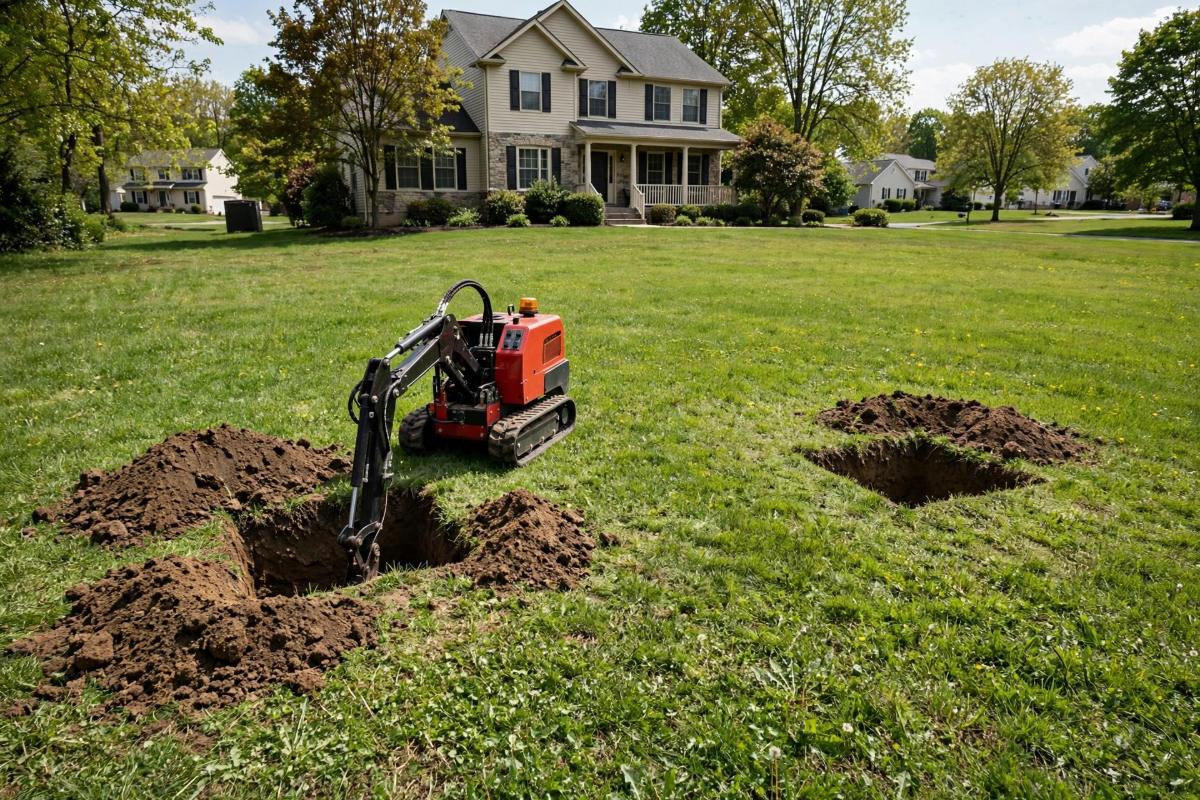 Small pits, big result
On most jobs, two pits do it: one where the new pipe enters and one where it exits, usually near the foundation and near the curb stop. Long or complex runs sometimes need an intermediate pit. Each pit is only as big as the equipment needs, a fraction of an open trench.
Pit placement is planned around what you want to protect. The crew will show you where each pit goes before digging, and backfill and grade each one when the pipe is in. If you have a spot that absolutely cannot be disturbed, say so early: routing around it is easiest on paper.
This is where no dig water line replacement proves its value, and where Manheim homeowners see the clearest payoff. A stamped concrete driveway, a paver patio laid a decade ago, a fifty-year-old oak with roots through the whole front yard: these are the features an open trench would destroy and a trenchless method simply passes under.
Roots deserve a note. They are often the reason the old line failed, pressing joints apart over the years. The new pipe goes in as one continuous run with far fewer joints to attack, and the pro will flag any root mass that needs clearing from the path.
Homes with aging pipe across the whole run sometimes pair this conversation with old water service line replacement planning, since a line old enough to fail once is worth evaluating end to end.
In Manheim borough, the case for trenchless practically makes itself. Narrow lots, rear alleys, brick walks and mature street trees leave little room for an open trench, and the short runs keep pit work compact. Borough homeowners also like that the street-facing lawn stays presentable.
In the townships, the math shifts to driveways and landscaping. Penn Township's suburban lots often run the line under a full driveway apron, and Rapho Township's larger lots near the borough edge can carry long runs under established lawns. In both, trenchless trades a long restoration for two tidy pits.
Every Manheim lot gets the same honest fit check. See how it applies street by street: water line replacement in Manheim Borough for tight borough lots, and water line replacement in Rapho Township for longer township runs.
Talk through pits, path and price before anything is scheduled.
No, and any honest pro will say so. Trenchless saves the most where restoration would be expensive: driveways, patios, mature landscaping. On a simple open run under plain lawn, a traditional trench can cost less. The right comparison for a quote is total project cost, restoration included.
Usually two small access pits, one at each end of the run. Longer or more complex routes sometimes need an intermediate pit. Each pit is backfilled, compacted and graded when the pipe is in.
That is one of its classic uses. Both pipe bursting and directional boring pass the new line under driveways, patios and walks without breaking them. The pro confirms the path is workable for your soil and line before committing to the method.
Pipe bursting needs the old pipe to be intact enough to guide the bursting head, so badly collapsed sections can rule it out. Directional boring does not need the old pipe at all, since it drills a fresh path. The condition of your line decides which method, if either, fits.
Call and describe your lot: the run's length, what sits over it, and what the old pipe is made of if you know. Many candidates can be screened on the phone, though some lots need an on-site look before anyone commits to a method.
With pipe bursting, the old pipe is fragmented outward into the surrounding soil as the new pipe takes its path. With directional boring, the old line is simply left abandoned in place and the new line takes a fresh route. Either way, only the new line carries your water.
Roots are often why the old line failed, and the crew plans for them. The new pipe goes in as a continuous run with minimal joints, which gives roots far less to exploit. Heavy root masses in the path get flagged and dealt with before the pull.
No. As with any replacement, the water is off only while the new line is connected and tested, and that window is coordinated with you in advance. Most homeowners go about their day while the work happens outside.
If the thought of an open trench across your lawn, driveway or landscaping has been holding you back, it is worth a call. For trenchless water line replacement Manheim homeowners can discuss with a local pro today, call (223) 242-0393: honest fit check, upfront pricing explained before work begins, no hidden fees.
Call to check your lot's fitCalls answered 24/7. Straight answers on the phone.