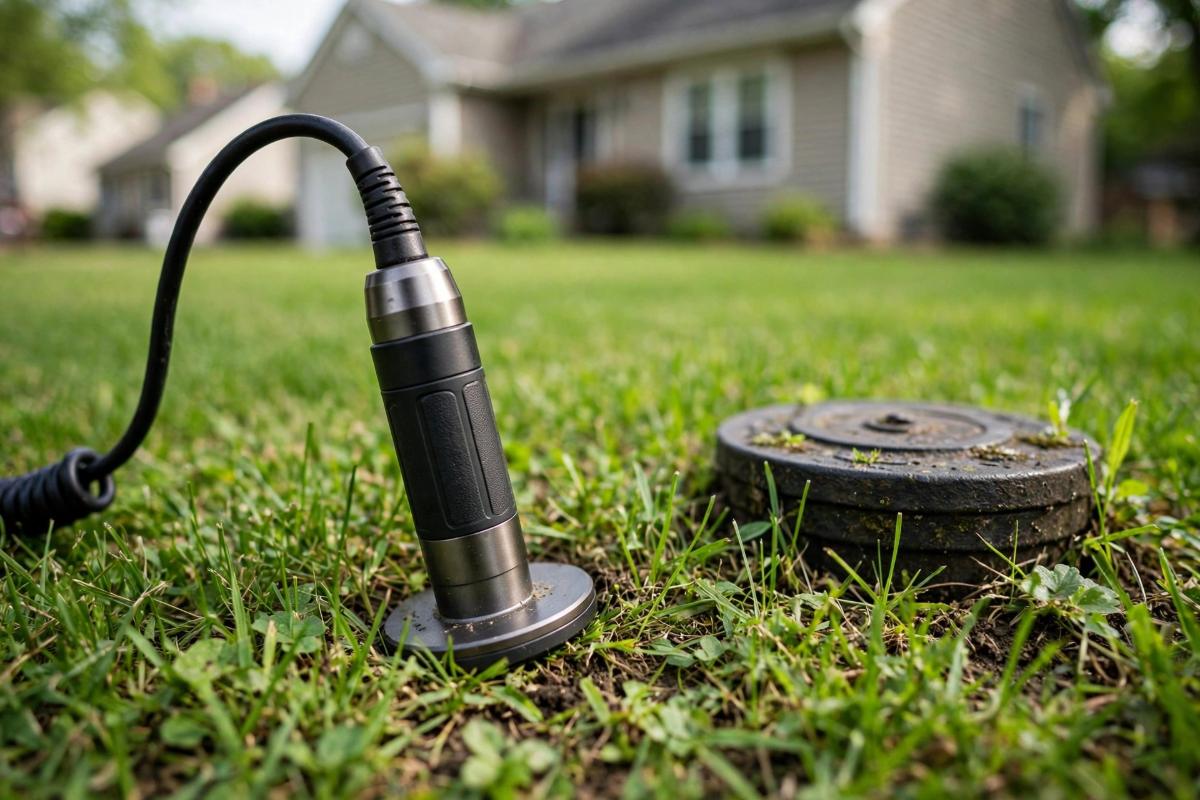
 Find it before you dig
If your water bill jumped for no clear reason, a leak on the underground service line between curb and house could be running day and night without making a puddle. This page walks you through the meter test, the outdoor signs, and how a local pro pinpoints a buried leak before anyone digs. Looking for water line leak detection Manheim pros can start today? Start with the meter test below.
Manheim Main Water Line Co. connects you with experienced local pros who work on Manheim water lines every week. Calls are answered 24/7, with same-day or emergency dispatch where available. If the meter is spinning and you do not know why, call (223) 242-0393 and describe what you are seeing. You will get a straight answer about what comes next.
The quick version
- A meter that moves with all taps off is the strongest sign of a leak on the service line, and the reason most calls start here.
- Underground leaks often show up as a soft patch of lawn, a wet spot near the foundation, or a climbing bill.
- Pros use acoustic listening, line tracing, and pressure testing, so digging only happens where the leak actually is.
| Meter result | Likely location | Next step |
|---|---|---|
| Moves with all taps off | Service line or house plumbing | Pro isolation test |
| Stops after main valve closes | House side | Plumbing check |
| Keeps moving after valve closes | Curb-to-house line | Locate, then repair |
Water line leak detection Manheim: the meter test, step by step
The water meter test is the simplest way to confirm a leak. Find the meter box, usually at the curb, lift the lid, and read the dial or the small leak-indicator triangle. Make sure every tap, toilet, dishwasher, washing machine, and outdoor spigot is off, then watch the meter for at least 15 minutes. If the dial moves or the triangle keeps spinning, you have a water meter moving with taps off, which confirms water is flowing somewhere it should not be. That is when leak detection on the water line in Manheim becomes the right next call.
A few details make the test more trustworthy. Check that toilets are not running silently, since a bad flapper moves the meter just like a leak can. Turn off ice makers and hose timers so a scheduled cycle does not fool the reading. Photograph the dial with the time visible. That photo is the starting point for leak detection on the water line in Manheim, and a pro will want to see it when you call (223) 242-0393.
Signs outside the house
Underground leaks give themselves away if you know where to look, and spotting them early makes the search faster. The classic sign is a wet spot in the yard that never quite dries, even in dry weather. You might notice one patch of grass that stays greener and softer than the rest. In winter, a leak can keep a patch of ground oddly unfrozen while the surrounding lawn freezes solid.
- A soggy or sunken area in the lawn or near the foundation with no drainage explanation.
- A sound of running water when the house is quiet, near the foundation wall or in the basement.
- Water pressure that dropped at the same time the bill went up, which often points to a line losing water underground.
- Soil settled in a line between the curb and the house.
- An unusually high water bill over two or more billing periods with no change in household habits.
No single sign proves the leak is on the service line. A wet spot can be grading, a high bill can be a running toilet. The signs give the pro a starting point for leak detection on the water line in Manheim. A wet spot with no drainage explanation, or a meter moving with taps off, both point the same direction. Mention both when you call, since a leak can also cause a low water pressure main line problem.
Describe your meter reading and any wet spots, and get a visit scheduled. Calls answered 24/7.
Water line leak detection Manheim pros use to pinpoint a buried leak
Professional leak detection relies on listening and measuring. The most common method is acoustic detection: a sensitive ground microphone is moved along the suspected line while the technician listens for the hiss or vibration of water escaping under pressure. An experienced ear can tell a real leak apart from background noise, and the results are often precise enough to mark the spot within a small area.
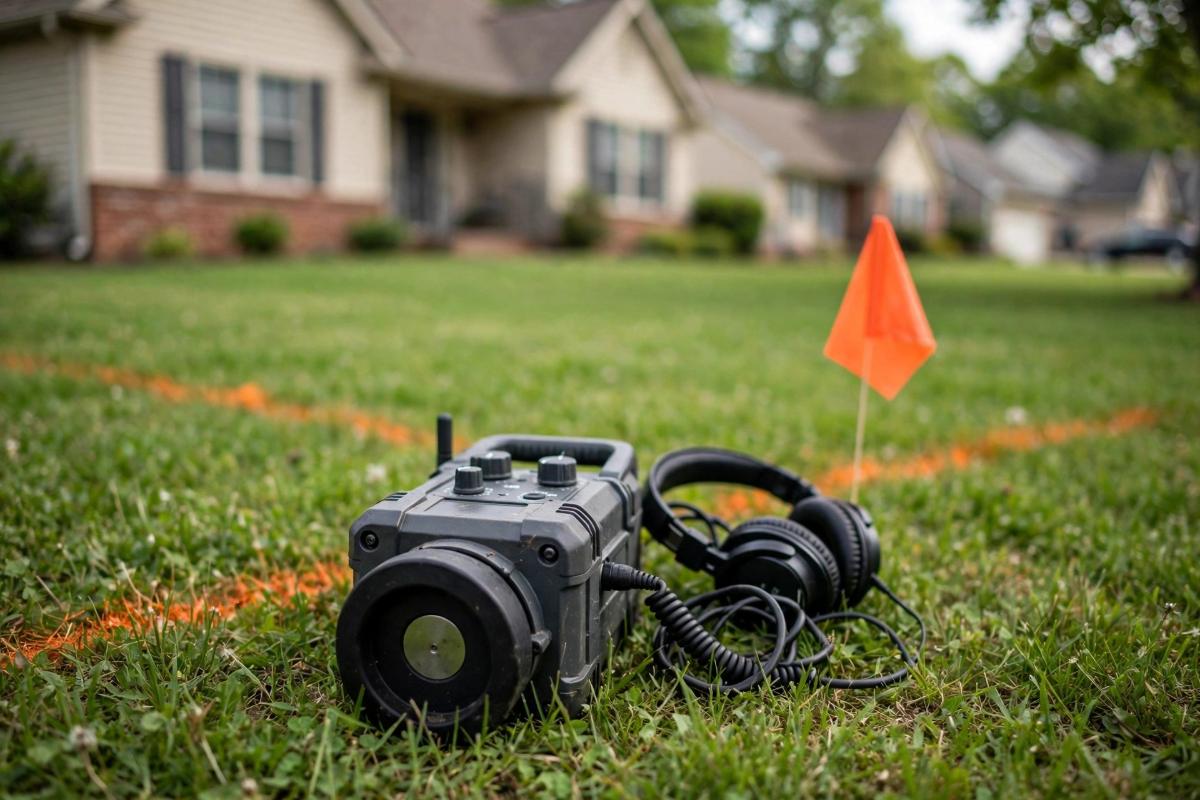 Listening for the leak
Tracing comes into play when nobody is sure where the line runs, common on older Manheim properties where the line was never mapped. A tracing device sends a signal along the pipe so the technician can mark its path. Pressure testing is the third tool: the line is isolated in sections and each section is held at pressure, so a section that will not hold contains the leak. Together these methods narrow the search to a single diggable spot, which is the whole point of having the water line checked for leaks in Manheim.
Leak on the line vs leak inside the house
One of the most useful things leak detection on the water line in Manheim does is answer a question the meter cannot settle: is the leak on the buried service line, or in the plumbing inside the house? The distinction matters because the fix and the access are different. An underground water leak on the service line means water is escaping between the curb stop and the foundation, under soil. An inside leak means it is escaping in the house plumbing.
The pro usually sorts it out with an isolation test. With flow confirmed, the main shut-off valve is closed. If the meter stops moving, the leak is on the house side. If the meter keeps moving, the leak is between the curb stop and the house: a service line leak. That one test points the whole job in the right direction.
A short phone call can sort line leaks from inside leaks. Upfront pricing is explained before any work begins.
What happens after the leak is found
Finding the leak is half the job; the other half is choosing the right fix. A single clean break or failed joint on an otherwise sound line can often be repaired at that one excavation. This is the ideal outcome of leak detection on the water line in Manheim and the most common one when the rest of the line is in good shape.
Sometimes locating work reveals a bigger story. If the line shows corrosion along its length or multiple weak spots, repairing one hole can feel like patching the first of several. Then the pro may talk about old water service line replacement for the whole private side. That conversation should include straight answers about the work and the cost before you agree to anything, with no hidden fees. That upfront clarity is part of a good visit.
Repair or replacement? Get a clear explanation of both during your visit. Technicians who know Manheim homes.
Manheim homes and hidden leaks
Manheim's older housing stock gives underground leaks plenty of places to hide. The borough was laid out in 1762, and many 19th-century brick homes and early-20th-century blocks near the center still run on service lines installed generations ago. Deep frost and freeze-thaw cycles stress buried pipe every winter, and tree roots pressing on joints can open them.
If your home is in the borough and the line has never been updated, a detection visit doubles as a condition check on the whole run. Homeowners in the surrounding areas get the same: water line replacement in Manheim Borough and water line replacement in Penn Township both start with knowing exactly where the problem is, which is what a detection visit provides.
While you wait
- Shut off the main valve inside the house if water is actively escaping; leave everything else alone.
- Photograph the meter dial with the time visible, as a record of how fast it is moving.
- Stay off soft ground above the suspected leak, and do not dig.
- Note when the bill started climbing and whether pressure dropped too; both details help the pro.
Common questions
The meter test reliably confirms water is moving when it should not be, as long as every tap, toilet, and timer is truly off. Pinpointing the location is what professional detection equipment is for.
Intermittent movement can mean an intermittent problem, like a toilet that runs only sometimes. Test again with those devices idle and watch a full 15 minutes.
The usual method is an isolation test with the main shut-off valve closed. If it keeps moving, the leak is on the buried line between the curb stop and the house.
Not always. Water can drain away through gravel or sandy soil without surfacing, so a dry yard does not rule out a leak.
No digging is needed for the detection itself. Acoustic listening, line tracing, and pressure testing all work from the surface. Digging only happens afterward, at the marked spot, if a repair is the agreed fix.
Run the meter test with every fixture off and photograph the dial. If the meter still moves, call for leak detection on the water line in Manheim so a pro can locate the loss.
Freeze-thaw cycles and deep frost stress buried pipe and joints. If a bill climbs or a wet spot appears during or after the cold months, leak detection on the water line in Manheim will confirm whether weather was the trigger.
Homeowners are usually responsible for the private side, from the meter, curb stop, or property line to the house. Check with your water provider to confirm where their responsibility ends. That boundary matters because it decides who pays for the repair.
A detection visit pinpoints the leak before any digging. Same-day dispatch where available.
Areas we serve
Water line services
Stop guessing and find the leak
A moving meter, a wet spot in yard grass and a climbing bill are questions, not verdicts. Water line leak detection Manheim crews turn them into an answer: where the leak is and what the fix should be. Call (223) 242-0393 and get an answer before the next bill arrives.
Call for water line leak detection Manheim todayCalls answered 24/7. Upfront pricing explained before work begins.